If you ask a general contractor how long an air conditioner lasts, they will likely tell you “12 to 15 years.” If you ask that same question to a savvy Lake Worth homeowner who lives East of Dixie Highway, they might laugh and say, “You’re lucky if you get 7.”
It is a harsh reality of our geography: the closer you live to the ocean, the shorter the life expectancy of your outdoor equipment. The relentless combination of high humidity, intense sun, and salt spray creates a “corrosion zone” that eats away at machinery. But here is the secret: a short lifespan is not inevitable. While you can’t change your location, you can change how you care for your system. With the right strategy, you can beat the odds and squeeze extra years of reliable cooling out of your unit. Here is the professional playbook for extending the life of your AC in Lake Worth.
We mentioned this in our first post, but it bears repeating because it is the single most important habit you can form. You must wash the salt off your unit regularly. However, how you wash it matters just as much as if you wash it.
The Protocol:
Frequency: If you are oceanfront, do this weekly. If you are within a mile or two, do it monthly.
The Method: Turn off the thermostat. Use a standard garden hose with a spray nozzle set to “Shower” or “Mist.”
The Warning: NEVER use a pressure washer or the “Jet” setting. The aluminum fins on your coil are as delicate as paper. High pressure will bend them flat, blocking airflow and killing your compressor faster than the salt ever could. Aim the water from the top down to let gravity carry the salt away.
The metal box (cabinet) that houses your unit is painted steel. Once that paint fades or chips, rust begins. Believe it or not, one of the best ways to protect it comes from the automotive world.
The Protocol: Once a year (perhaps at the start of the cool season), wash the cabinet and apply a coat of high-quality car wax.
Why it works: The wax creates a hydrophobic layer that repels water and salt spray. It also protects the paint from UV damage, keeping it intact longer. It’s a simple, low-cost Saturday afternoon project that keeps your unit looking and functioning like new.
In Lake Worth’s tropical climate, plants grow incredibly fast. It’s common to see AC units completely swallowed by hibiscus hedges or areca palms.
The Protocol: Maintain a strictly cleared “buffer zone” of at least 2 feet around the entire unit.
Why it works: Vegetation traps moisture. If your unit is surrounded by dense leaves, it never truly dries out after a rainstorm or heavy humidity. Constant dampness accelerates corrosion. Furthermore, leaves trapping salty air against the metal acts like a wet, salty sponge. Let the unit breathe and dry out in the sun.
Salt doesn’t just eat metal structures; it creeps into electrical connections. Salt buildup increases electrical resistance. Resistance creates heat. Heat melts wires and kills compressors.
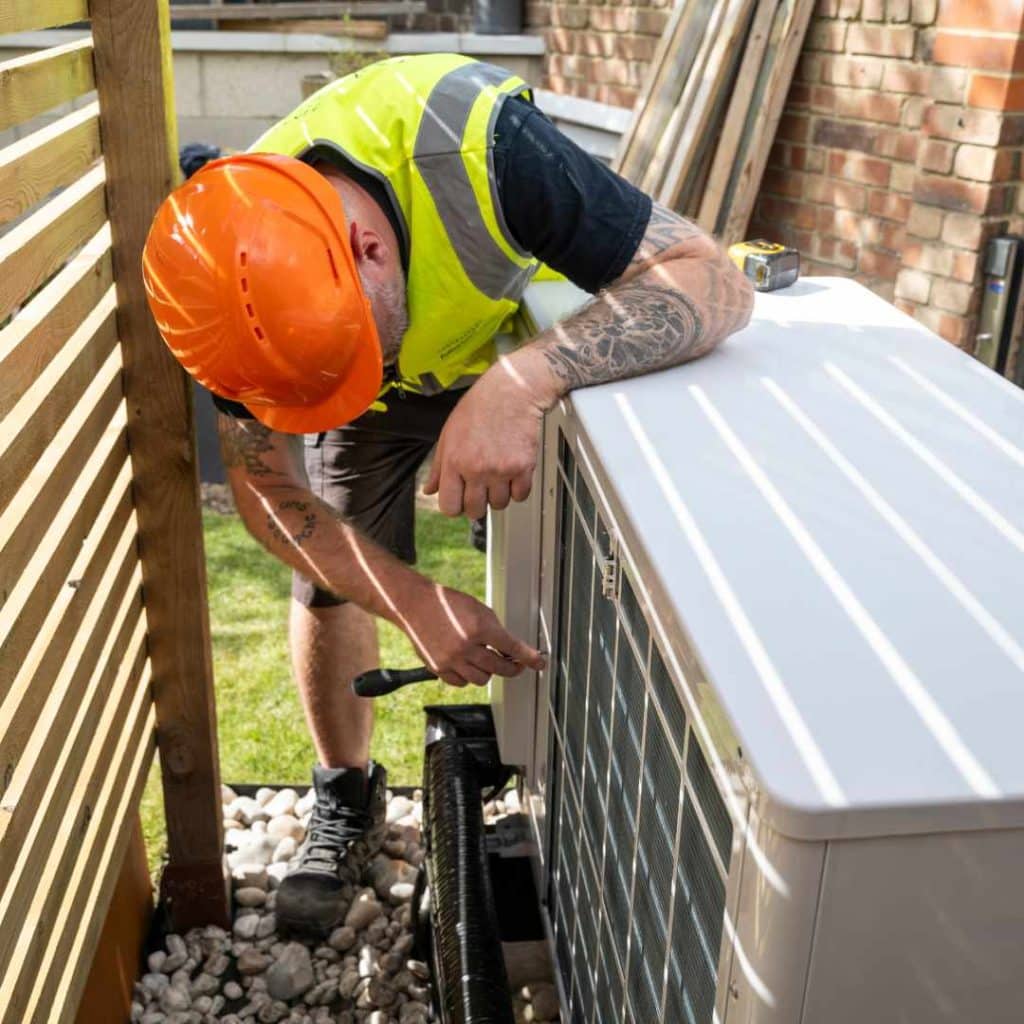
The Protocol: This is where professional maintenance is non-negotiable. You shouldn’t mess with high-voltage wiring, but you should ensure your technician does. During a Richard’s AC maintenance visit, we:
Tighten: We check every electrical lug and screw. Vibration loosens them, and salt gets in the gaps.
Inspect: We look for the green/white powdery corrosion on wires that indicates a voltage drop is happening.
Protect: We often apply dielectric grease or specialized corrosion inhibitors to electrical contacts to seal out the salty air.
A small rusty screw today is a stripped, unremovable screw tomorrow. Small problems in a coastal environment become unfixable big problems very quickly.
The Protocol: If you see a rusted screw on the access panel, replace it now with a stainless steel one before it seizes. If you see a scratch in the paint, touch it up with rust-inhibiting paint immediately. Being proactive with small repairs prevents the “cancer” of rust from spreading to vital components.
The Value of a "Salt Shield" Maintenance Plan
In Lake Worth, maintenance is not just about checking refrigerant levels; it’s about war against the elements. A twice-yearly professional check-up is the best insurance policy you can buy. It catches the corrosion before it eats through the coil and catches the electrical resistance before it burns out the motor.
At Richard’s AC, we treat coastal units with the specific care they demand. We help you fight the salt so you can enjoy the cool.
For expert AC Maintenance and Repair, trust the team that knows the Lake Worth environment. We proudly serve homeowners in Lake Worth, Royal Palm Beach, Wellington, and across Palm Beach County.
Get more years out of your AC. Contact us today to schedule your coastal maintenance service!