Buying a new air conditioner is a significant investment for any homeowner. But for residents of Lake Worth, especially those living East of I-95 or near the Intracoastal, the stakes are even higher. You aren’t just buying a machine to cool your air; you are buying a machine that has to survive a brutal chemical environment.
We see it all the time: a homeowner installs a standard, “big-box store” air conditioner, thinking they got a great deal. Three years later, the fins are crumbling, the base is rusted, and the refrigerant is leaking. The harsh reality of Lake Worth is that standard equipment is essentially disposable here. To get a return on your investment, you need equipment built to fight back against the salt. Here is what you need to look for when choosing the best AC unit for coastal living.
The Game Changer: All-Aluminum Coils
For decades, the industry standard was copper tubing with aluminum fins. As we’ve discussed, salt water turns this combination into a battery that eats itself (galvanic corrosion).
- The Solution: The single biggest advancement for coastal homeowners is the shift to all-aluminum coils.
Why it works: When the entire coil assembly—tubing and fins—is made of the same metal (aluminum alloys), the galvanic reaction cannot occur. There is no “battery effect.”
The Result: These coils are incredibly resistant to salt corrosion. Major manufacturers like Trane and American Standard have pioneered this technology (often called Spine Fin™ or similar), and it has proven to be a lifesaver for longevity in Lake Worth. If you are shopping for a new unit, “all-aluminum” should be at the top of your checklist.
The Foundation: Composite (Non-Metal) Base Pans
The base pan is the floor of your outdoor unit. On standard economy models, this is made of painted steel. Once the paint chips (which happens quickly with weed whackers and debris), the steel rusts. In Lake Worth, we frequently see units where the bottom has completely rotted out, leaving the heavy compressor precariously unsupported.
- The Solution: Look for units that feature a composite base pan.
Why it works: These are made from high-strength, industrial plastics or composite materials—similar to what is used in modern car bumpers.
The Result: Plastic cannot rust. It doesn’t matter how much salt spray or standing water sits in the bottom of the unit; the structural foundation will never corrode, crack, or rot.
The Armor: Factory-Applied Coastal Coatings
Standard units come with a basic coat of paint. Coastal-rated units often come with, or can be ordered with, specialized protective coatings on the coils and cabinet.
- The Solution: We look for coatings like WeatherGuard™ or epoxy-phenolic dips.
Why it works: These aren’t just sprayed on; they are often dipped or baked on at the factory to ensure every microscopic crevice of the metal is sealed from the air.
The Result: It creates an impermeable barrier. The salt might sit on the surface, but it can’t touch the metal to start the corrosion process.
The Details: Stainless Steel Hardware
It’s the little things that cause the biggest headaches. On a cheap unit, the screws that hold the panels together are standard steel. After two years in Lake Worth, these screws rust into solid lumps. When a technician comes to fix a minor part (like a capacitor), they can’t get the panel open without drilling out the screws, turning a $150 repair into a much bigger labor charge.
The Solution: Premium coastal units use stainless steel or coated fasteners that resist binding and rusting, ensuring the unit remains serviceable for its entire life.
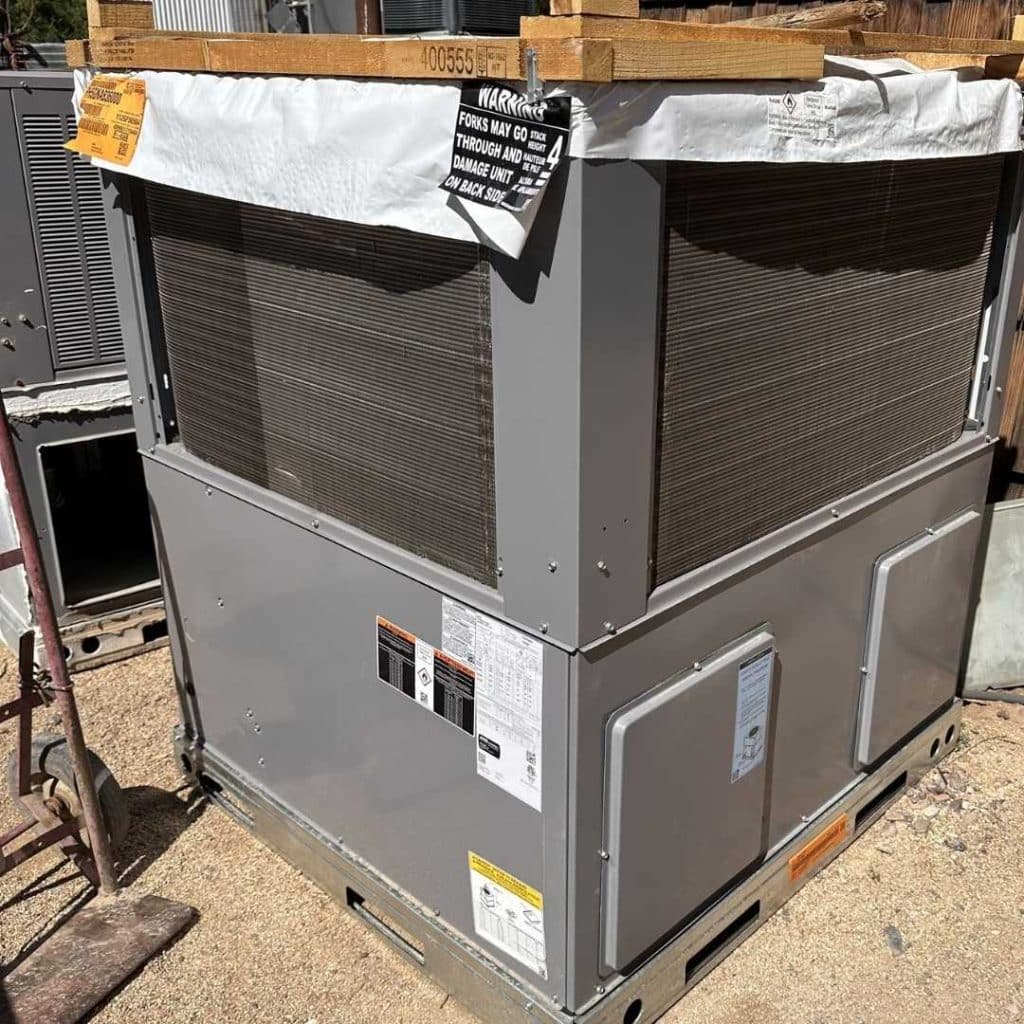
The Math: Spending More to Save More
We understand that coastal-specific units often come with a higher price tag than basic builder-grade models. However, the math is simple.
Option A: Buy a cheaper standard unit ($) that rots and dies in 5-7 years.
Option B: Invest in a coastal-rated unit ($$) that lasts 12-15 years.
Over a 15-year period in Lake Worth, Option A forces you to buy two or three air conditioners. Option B requires only one. The “expensive” unit is actually the cheapest option in the long run.
Expert Advice for Your Specific Location
Not every home in Lake Worth needs a fortress-grade air conditioner. If you live further west, the requirements might be different than if you live on Federal Highway.
At Richard’s AC, we don’t just sell boxes; we consult. We assess your specific exposure to salt air and recommend the right level of protection for your budget. We partner with top brands that offer the best warranties for coastal zones.
For professional AC Installation and Consultation, trust the team that knows the coast. We proudly serve homeowners in Lake Worth, Royal Palm Beach, Wellington, and across Palm Beach County.
Ready to stop the rust? Contact us today for a free quote on a coastal-ready system!